In thorough implementation of the policy on educational opening-up in the new era, our school closely aligns with national strategic needs, bases itself on the overall development of Peking University, accelerates the process of internationalized education, and expands the enrollment scale of international students. With a large number of international students coming to study at Nanyan Garden, the School of Humanities and Social Sciences has specially designed Introduction to China, a compulsory public course about China’s national conditions, for students from Hong Kong, Macao, Taiwan and international students this semester.
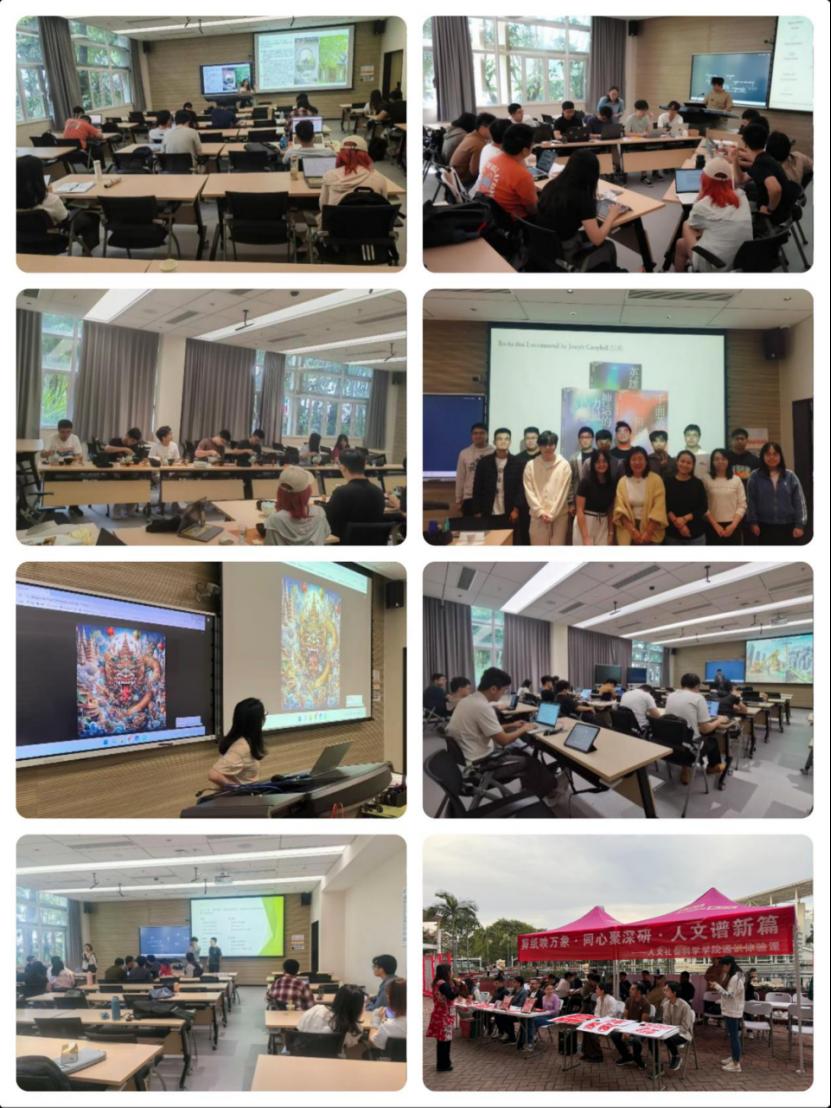
The course was taught by 7 interdisciplinary teachers, covering eleven thematic topics including geography, humanities, science and technology, food culture, landscape gardening, and cultural and creative industries. From an objective perspective, it elaborated on the characteristics and development concepts of China in the new era. Through intuitive and vivid teaching, it systematically presented China’s historical context, contemporary development status and cutting-edge scientific and technological trends, guiding students to go beyond fragmented perceptions and construct a complete, true and tangible "picture of China". By taking this course, students formed a basic understanding of China’s humanistic and social development, which helped them better adapt to study and life in China, cultivated the academic interest of deeply understanding and researching China, and fostered the sentiment of knowing China, being friendly to China and loving China.
The teaching team of Introduction to China adopted interdisciplinary and specialized lectures. Teachers conducted in-depth analysis of their respective topics from different fields, helping students build a comprehensive and systematic cognitive framework of China. To ensure the integrity and coherence of teaching, the course team implements collective lesson preparation, unified syllabus and regular classroom feedback mechanisms, enabling "diversity" to resonate harmoniously within the rigorous teaching design and form an organic whole. Teachers aimed to help international students see a real, multi-dimensional and vivid China, rather than a stereotype pieced together from external perspectives.
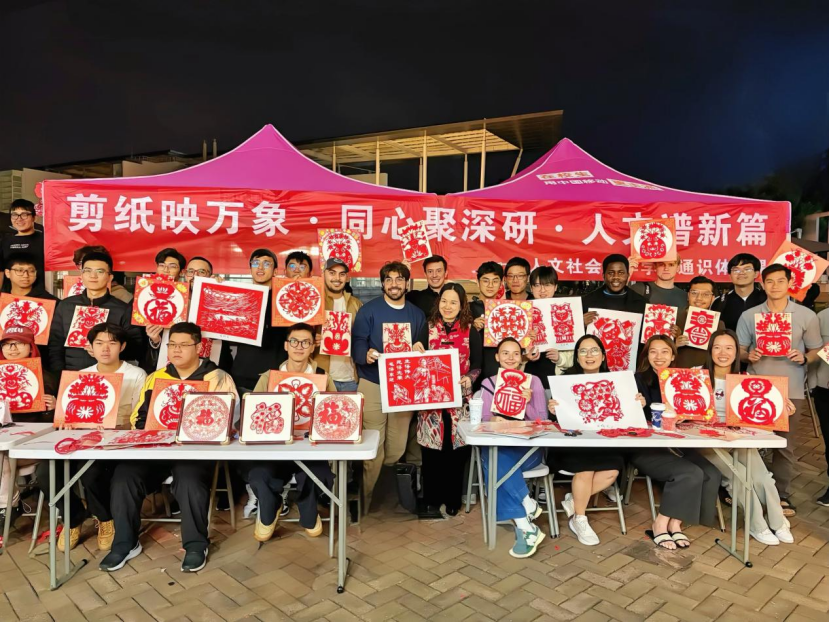
To innovate teaching methods, the course adopts a diversified teaching model of "lecture + reading + discussion + presentation + practice", encouraging active student participation and cross-national comparisons based on their own cultural backgrounds. The course also specially set up practical sessions. The final class of this semester, themed "A World from Paper-cutting, Unity at Shenzhen Graduate School, Humanities Write a New Chapter", was a lively paper-cutting experience class was held by the lakeside at Jinghu, attracting around 40 international students from all over the world. In this engaging Chinese cultural class, participants immersed themselves in the unique charm of paper-cutting art and the profound heritage of Chinese culture.
Course Topics:
Lecturer Han Xili delved into the wisdom and aesthetics of traditional Chinese gardens, as well as the exploration of the diverse values of modern parks, from multiple dimensions including the political philosophy of imperial gardens, the reconstruction of urban green space systems in New China, humanistic practices, and cultural inheritance. The lecture aimed to help students gain insight into social humanities and appreciate the beauty of China.
Lecturer Chen Liyuan focused on the theme of "The Global Influence of China’s Life Sciences". She conducted an in-depth discussion on the outstanding research progress and its global influence at institutions such as the National Genomics Data Center China, Beijing Institute of Genomics of the Chinese Academy of Sciences, China National GeneBank, and BGI Research.
Lecturer Liu Xiao centered her lecture on the characteristics and representative dishes of China’s four major culinary traditions, as well as the customs and corresponding special foods of important traditional festivals like the Spring Festival, Mid-Autumn Festival and Dragon Boat Festival. Through an immersive experience of “Chabaixi” (a national intangible cultural heritage of tea art), she enabled international students to quickly form a preliminary cognitive framework of Chinese culture.
Lecturer Song Le focused on contemporary Chinese creative industries, starting with well-known contemporary Chinese IPs and creative industry practices. With a spotlight on POP MART and the game Black Myth: Wukong, he conveyed China’s concepts and efforts in the development of creative industries, and explored the visions and paths for the Chinese people to spread their own culture and expand global influence.
Lecturer Yang Shuang took "Shenzhen: A City with Double Faces" as her theme. She presented the inclusiveness and diversity of the city amid rapid development from two perspectives: Shenzhen’s image as a metropolis (Side A) and the reality of its urban villages (Side B). The lecture aimed to help students deeply understand how Shenzhen, through institutional innovation, governance exploration and social inclusiveness, demonstrates its distinctive traits of dual-faceted coexistence and dynamic openness.
Lecturer Li Qian focused her lecture on the core theme of exploring the rich diversity of Chinese languages and national language policies. By meticulously distinguishing the connotative differences between "language" and "dialect", and using typical cases, she conducted an in-depth analysis of the unique characteristics of dialects and the regional cultural heritage they carry. Meanwhile, she discussed the various challenges dialects are currently facing, and analyzed how to strike a balance between "promoting Mandarin" and "protecting dialects".
Lecturer Shen Xiaoyan interpreted Chinese-style love and marriage through the lens of gifts and changes. From the contractual rituals of rural China, the revolutionary weddings under collectivism, the mysterious code of "5201314" in modern WeChat red packets to the reward culture of virtual wedding live streams, she guided students to gradually appreciate the differences in the emotional coding of Chinese culture embodied in material carriers.
Sharing of Students' Learning Experience
Bao Xiaoqing, a student from Taiwan, China, said she gained profound insights during the tea brewing and tasting session of the course. "This course felt like opening one surprise after another with my own hands. Under the teacher’s meticulous guidance, as I watched the tea soup I brewed myself take on its charming color and fragrance, I truly felt that tea culture is no longer just cold words in books, but a warmth I can touch with my own hands," she added.
Izuchukwu Temilade Nwagbara from Nigeria said “I love movies featuring Jackie Chan and Bruce Lee. I have learned about China through films and music. Although Nigeria has its own paper-cutting tradition, Chinese paper-cutting is more intricate and complex. I am very happy to experience such a paper-cutting class before leaving China. ”
As a pivotal initiative of the School of Humanities and Social Sciences at PKU Shenzhen to advance the internationalization of higher education, the Introduction to China course has built a multi-dimensional platform for international students and postgraduate students from Hong Kong, Macao and Taiwan to form a systematic understanding of China through interdisciplinary and specialized teaching innovations. By virtue of the collective course preparation mechanism, the teaching team ensures the coherence of the knowledge system while granting full academic autonomy to experts from various fields, thus fostering a teaching ecosystem with both professional depth and engaging teaching dynamics. The course has also specially incorporated cross-cultural dialogue sessions, encouraging learners to conduct cross-national comparisons based on their local experiences. Through in-depth critical thinking on topics such as dialect protection and cultural innovation, students are nurtured to develop a global perspective and the capacity for cultural empathy.
Text: Liu Yalin, Li Jinliang, Cheng Chuance
Translation: Feng Yuhao
Layout: Zhang Qiyue
Proofreading: Liu Zekai
Reviewed and Released by: Wang Kejia, Wang Lin Office of Academic Affairs
Source: Official WeChat Account of Peking University Shenzhen Graduate School